

A Homeowners Guide To What’s Going On.
Energy prices are one of the biggest consumer and business owner worries around Brexit according to a recent Which? survey, 54% think their energy bills will rise, or have already done so. What impact could Brexit have on your bills? Lets look at the market information available to find out. A third of people (32%) think that Brexit will affect energy prices in future. Another 22% think Brexit has had an impact already. Even excluding Brexit, energy prices are one of the costs the most consumers worry about. Two-thirds of you are concerned about the price of gas and electricity, and two-thirds worry about fuel prices.
What Is There To Worry About?
If you are you worried about energy prices you are not alone. Over half of the UK think Brexit will, or already has, affected energy prices. More people think Brexit will, or already has, impacted the price of other things, such as food, holidays abroad and more. Just over a third of people expect there to be no impact on broadband or TV/on-line subscription prices. A fifth think energy prices won’t be affected by Brexit. But that’s just opinions of the average ‘man in the street’.
Has Brexit Increased Prices Already?
The short answer is – Yes. Call it market uncertainty, call it what you will, the weak pound on the international exchange markets affected all imported goods, including energy.
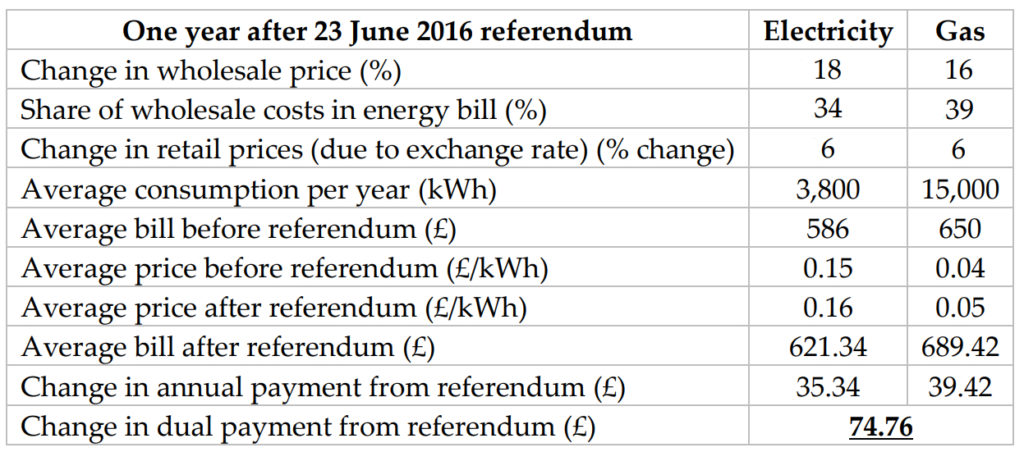
Research by the UCL found that energy bills increased overall by £2 billion in 2017 due to the lower value of sterling relative to the euro and US dollar. The average wholesale prices of electricity and gas rose by 18 per cent and 16 per cent respectively in the year after the referendum, translating into a £35 increase for electricity and £40 for gas for the average home owner.
Will Brexit Increase Energy Prices More?
Again, the short answer is – Yes, almost certainly in the short term. Without a deal, an old set-up for trading electricity could be used instead of creating something new. This will be less efficient and increase prices by around £200m by the mid-2020s. Consultancy firm ‘Vivid Economics’ suggests, though exchange rate movements will likely have a greater impact. National Grid estimates that UK consumers could face £500m of extra costs per year as a result of being outside the EU’s Internal Energy Market. The UK will also stop being part of some European energy organisations so it will not be able to influence their new policies in favour of the UK. For example, leaving Euratom could make it harder to get hold of nuclear material for power stations, or experts to service them. It is not yet known how directly this will affect consumer bills.
The best way to save money on energy is to switch energy deal or company for a better deal. Compare gas and electricity prices using an unbiased, whole market and impartial comparison site like Energy B2B Home Energy switch site to find the best deal for your home energy. For business users you are certain to get a better deal and some expert advice using a reputable commercial broker like ourselves.
What Needs To Happen To Achieve A Positive Outcome For Consumers?
Industry leaders and consumer groups have asked the UK government to reach a deal with the EU that:
- Keeps energy trading arrangements open between the UK and EU to keep flexible access to gas and electricity
- Avoids increased costs for consumers
- Maintains the Single Electricity Market for Ireland and Northern Ireland
- Keeps co-operation with regulators and standards boards that govern cross-border trading
- Engages with UK consumers to create a successful future energy policy with maximum consumer benefit
These are just five points that would need to be agreed to maintain the status quo and limit the expected price increases. How high up they are on the list of priorities is yet to be seen. Our advice to homeowners is the same as to business owners. Switch to a fixed deal now and fix for as long as you can!
For further reading try our related articles:
Energy and Brexit: What Are The Facts?
Where Does Our Energy Come From?