

The energy we use in the UK is a traded commodity like almost everything. As such, the UK is not self sufficient in terms of energy production and generation. This is part of a wider issue of the UK’s energy security. The UK imports directly 5% of it’s electricity from the EU and this is the figure banded about by the media to bolster the governments positive spin on the situation. This doesn’t tell the whole picture. For more information see the related article Where Does Our Energy Come From?
Will The Lights Go Out After Brexit?
Some of the gas and electricity we use in the UK is imported via ‘interconnectors’ (pipes or wires that carry electricity or gas between countries). Energy suppliers can buy and sell from the rest of Europe thanks to the EU Internal Energy Market which governs cross-border energy trading. Without a Brexit deal, the UK would leave this market. The EU would stop governing cross-border electricity flows from interconnectors with the UK. So new trading agreements will be needed. Gas is traded by an independently-owned platform, so the government does not expect gas trading to fundamentally change. There will be increases in non-commodity costs though so prices are on the whole expected to rise.
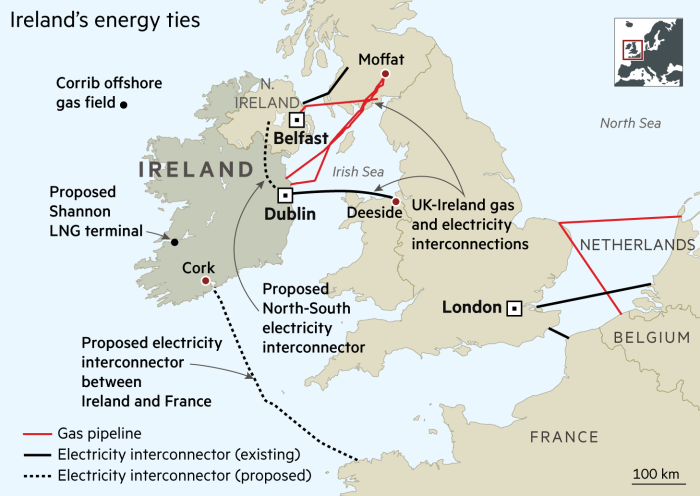
Regardless of the outcome of Brexit, the physical connections to the EU network will remain. Blackouts or supply shortages for England, Scotland and Wales are unlikely. Interconnectors are also important to having a low carbon energy system. Currently, excess low-carbon power (including renewables) can be traded across a large area, making the whole system more efficient.
How will Northern Ireland Be Affected?
Northern Ireland and the Republic of Ireland use the same market for trading wholesale electricity. This is called the Single Electricity Market and relies on cross-border trading which is governed by EU law. But once outside the EU, this law will not apply to the north. So cross-border supply may no longer be possible. Separate markets would be less efficient, and potentially costly for consumers. The government has said it will take ’all possible measure to maintain’ the Single Electricity Market and has advised companies to keep using its processes for the moment. Previously the government has considered generating electricity using military generators on barges in the short-term, which would be very costly. Since then, there have been auctions in Northern Ireland for capacity which the System Operator says will address any potential security of supply issues. New arrangements will have to be negotiated for the flow of energy to remain but at present, the position of energy supply in Northern Ireland looks as uncertain as the border situation.
What Happens Now?
Government, Ofgem and the Northern Ireland Utility Regulator are working with electricity interconnectors to get new rules approved. It’s not clear if these will be ready by the time we leave the EU. In Northern Ireland, if the market can’t continue, government and the Northern Ireland Utility Regulator will ‘take action to seek to ensure continued security of supply and market stability’.
Will Climate Targets Be Affected By Brexit?
Leaving the EU will mean that EU climate change and emissions reduction targets will no longer apply. The EU Emissions Trading Scheme, for installations which emit pollutants, will be replaced with a UK Carbon Tax. This will be roughly equivalent, and cost companies £16/tonne from 1 April. The Climate Change Act, which commits the UK to reduce greenhouse gases to at least 80% of 1990 levels by 2050, is domestic law so will still apply if the UK is outside the EU.
[email-subscribers-form id="1"] |